Spring
The snow goes, the canopy comes back and you can get seeds in the ground again.

Humanity has been erased from history. You're one of the last of us.
You wake on a beach with nothing, on an island that belongs to the dinosaurs. Knap stone, make fire, hunt, build a home and get a harvest in before the winter takes it. Every hill is solid all the way down, so you can tunnel into it, carve out a cave to sleep in or cut a channel and let the river follow you. Rain soaks you through, the cold gets into your bones, and when you die your gear stays where you fell. It's a hardcore survival game, and I'm building it to be played with friends.
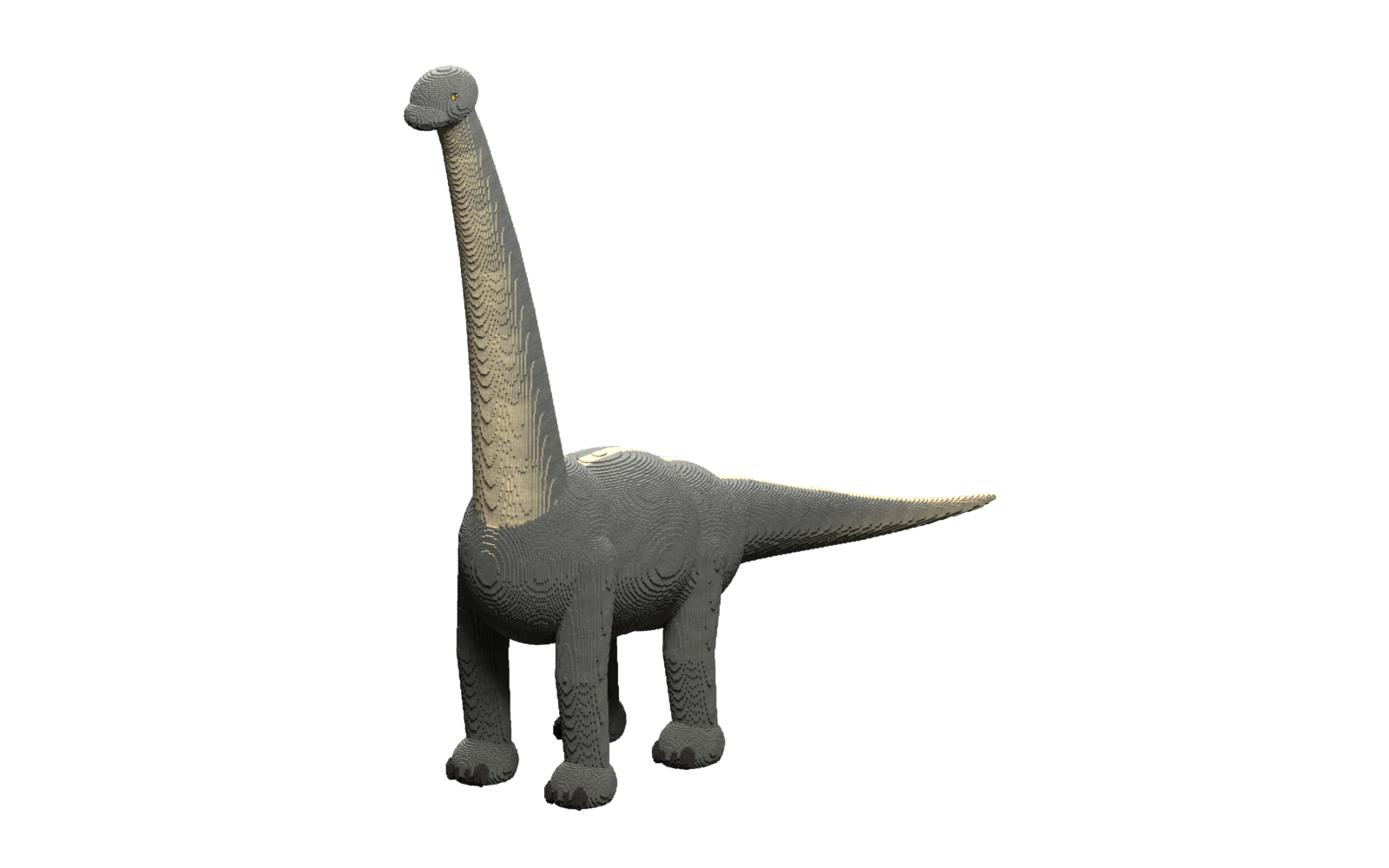
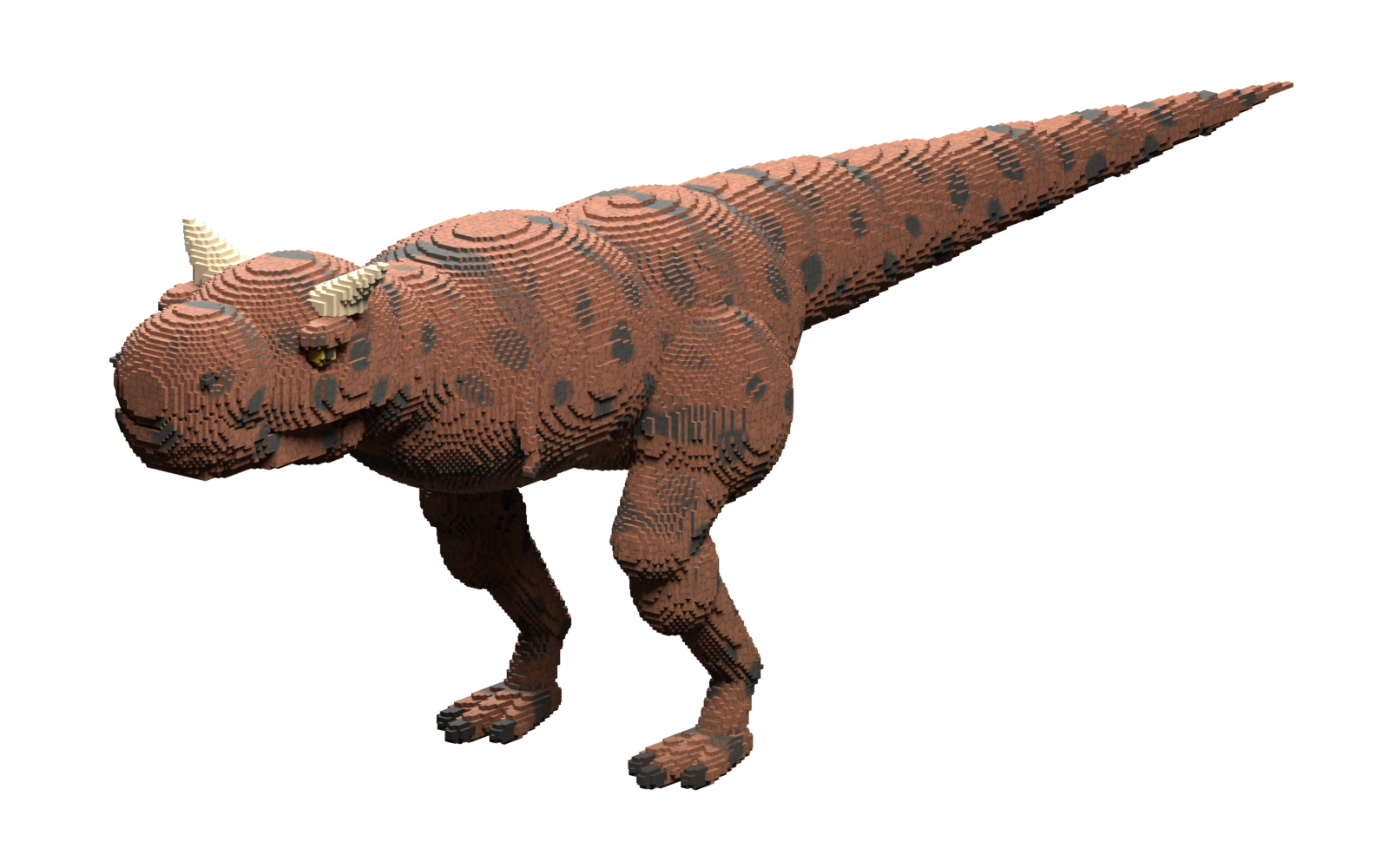
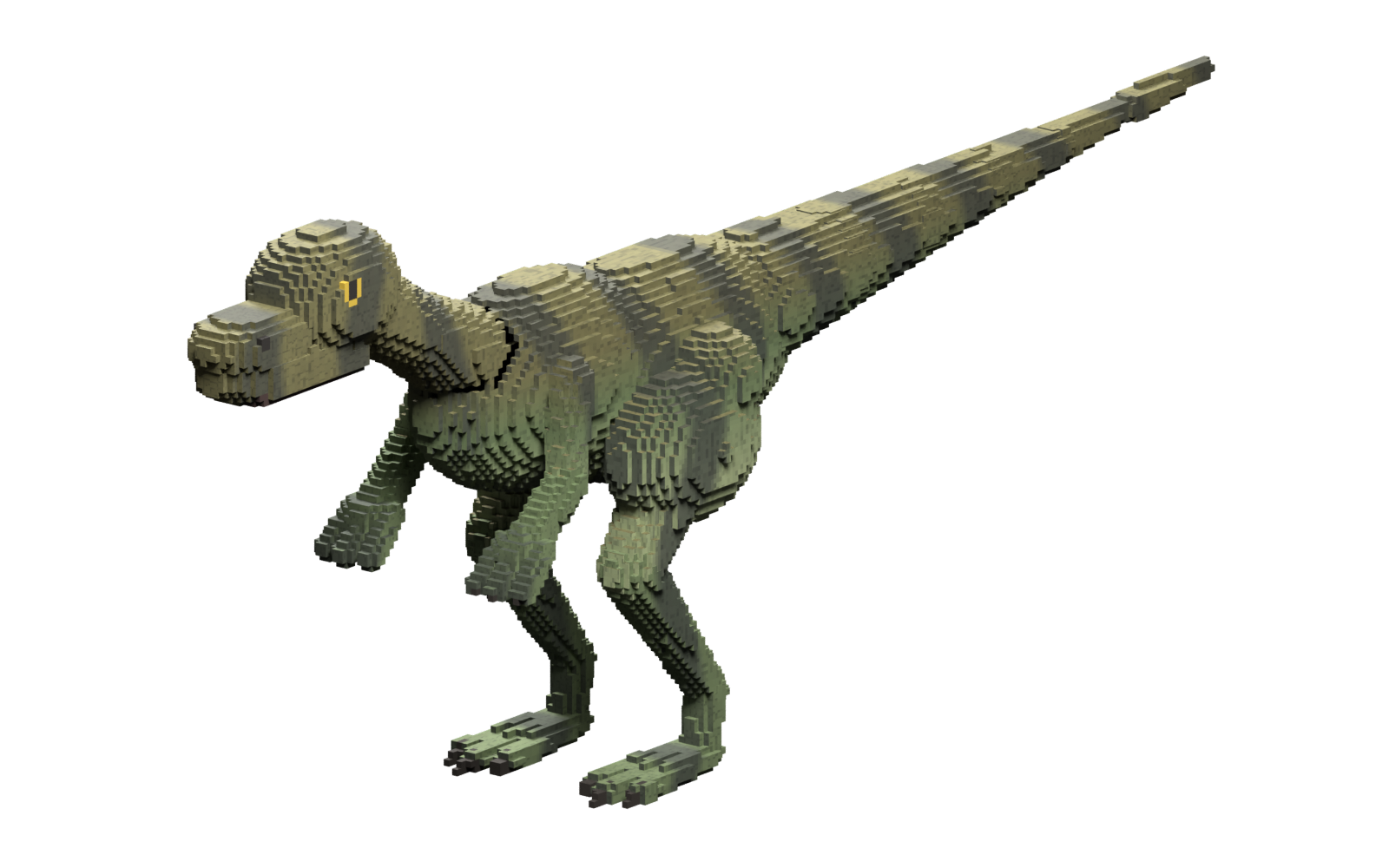
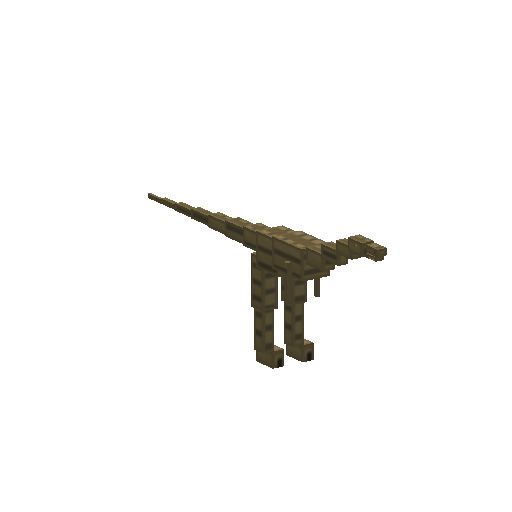
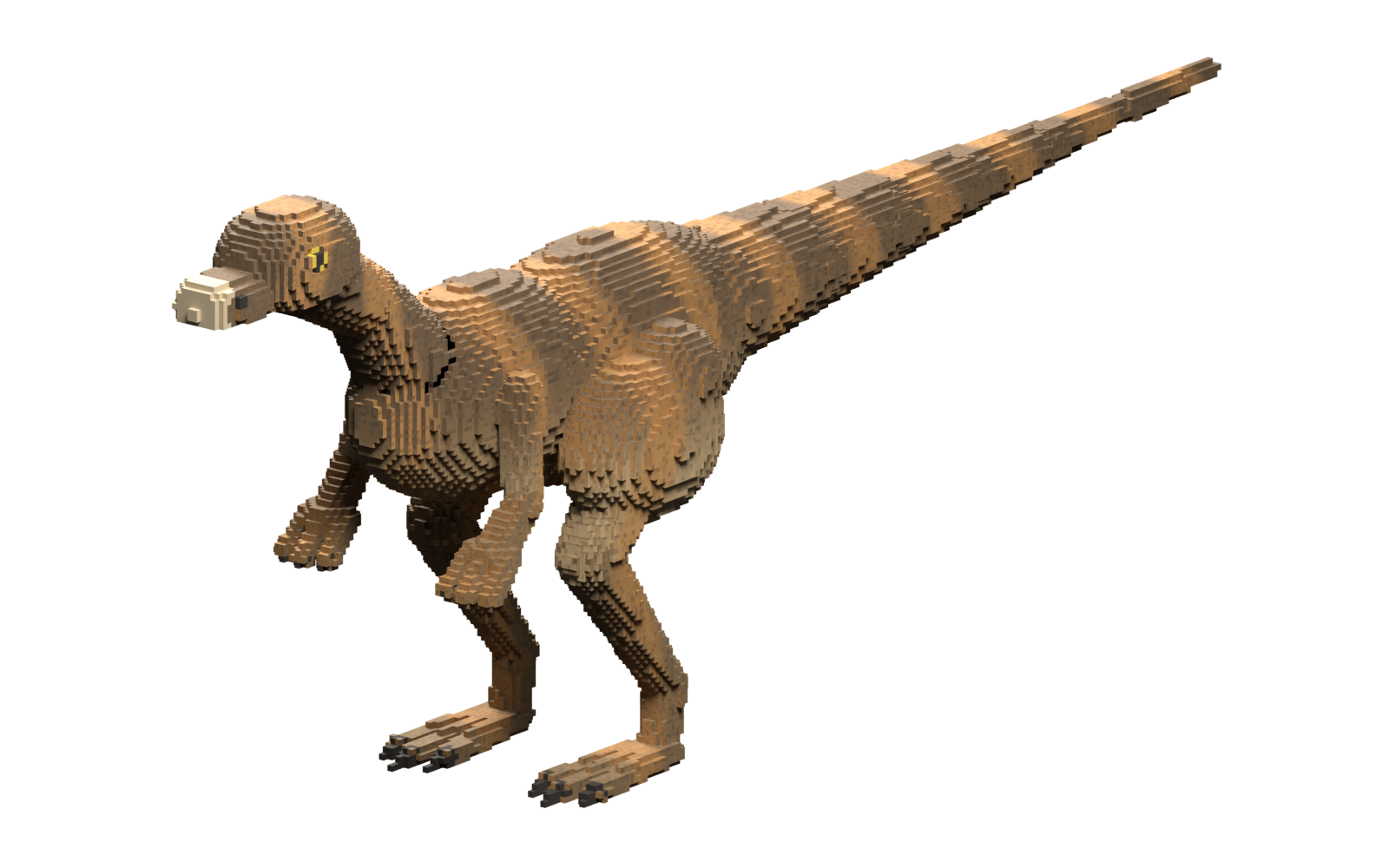
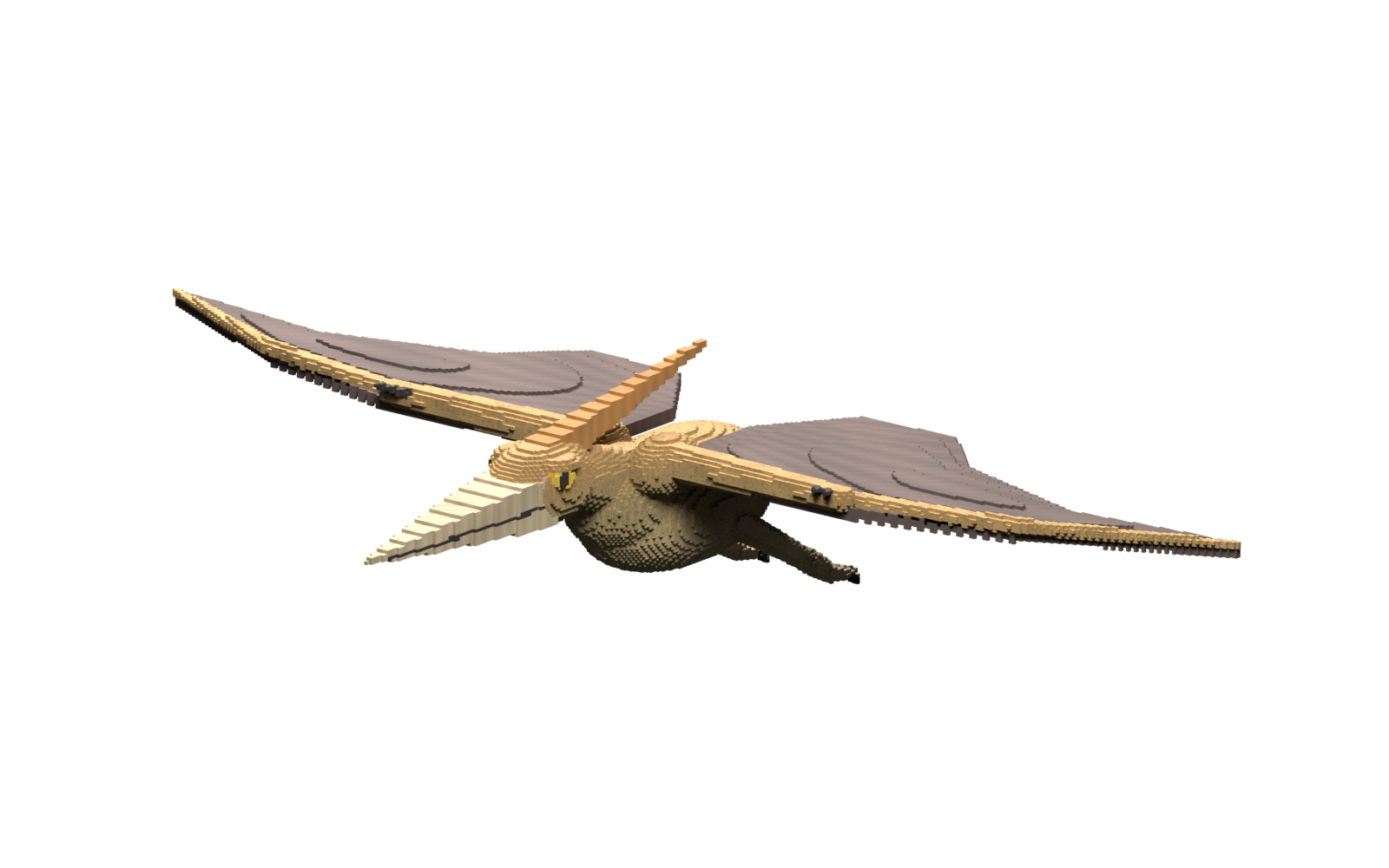
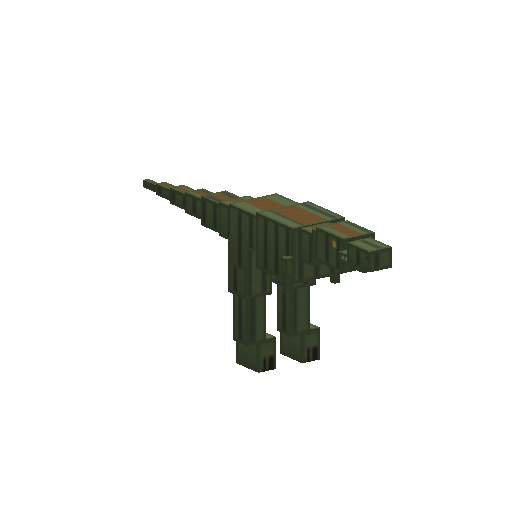
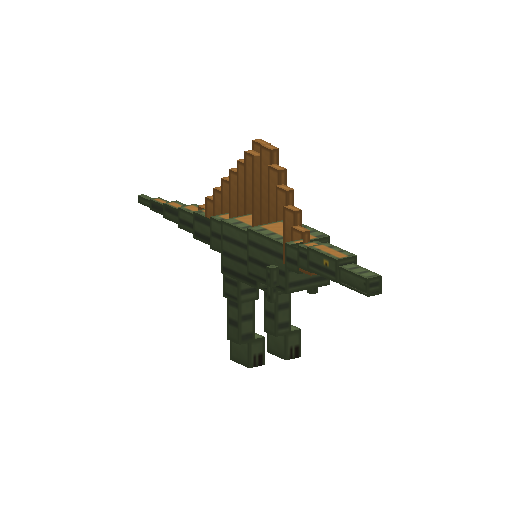
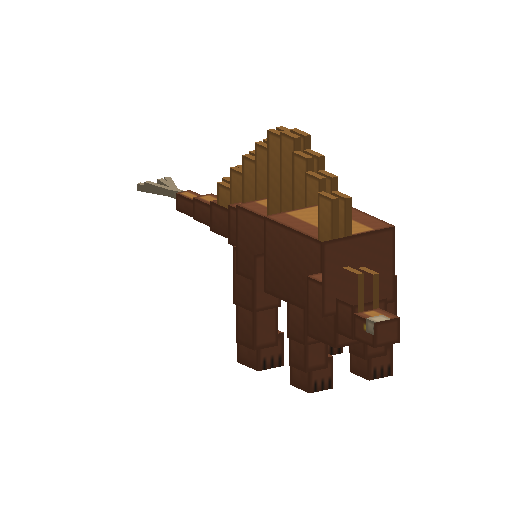
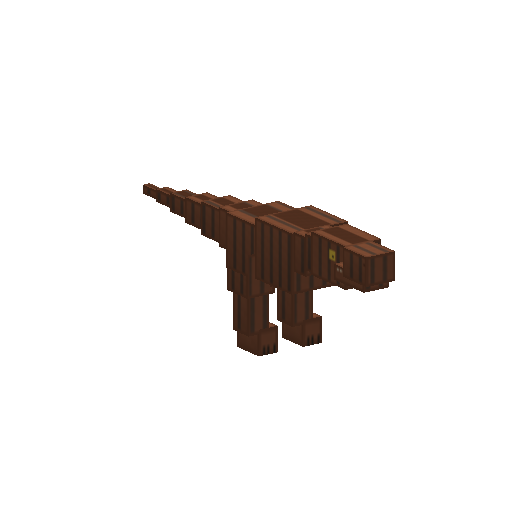
Every species has its own home range and moves through it, so the herd you passed this morning could be two valleys over by the time you come back. Herds run together and scatter when a predator walks in. Predators hunt you. A T-Rex can't turn on the spot, it has to swing round to face you, which is about the only thing in your favour. Learn where they go and you can live alongside them. Build a trough, put down feed and wait, and a Gallimimus will come to you: saddle it and you have a mount, and the island gets a lot smaller.
Hills, valleys, rivers, caves and coast, and all of it is solid ground you can take apart. Dig into a hillside for shelter on your first night, flatten a spot for a house, drop a shaft to see what's under your feet, and the land takes a natural shape around whatever you did. Cut through a trunk and the whole tree comes down. Break the bank of a pond and the water moves into the gap you opened.
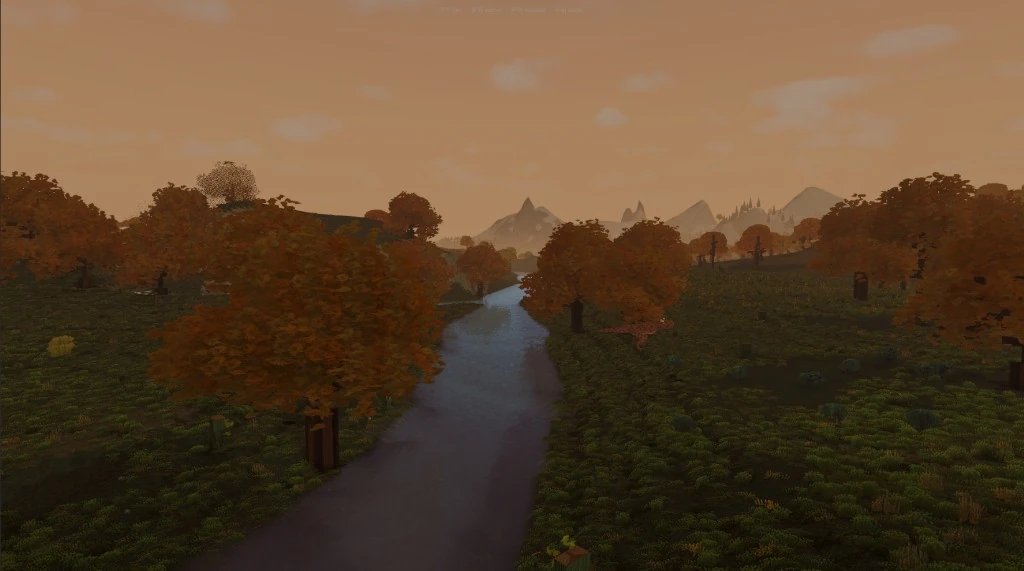
Rivers run from the high ground down to the sea. Dig a trench off one and the water comes with you. Step in and the current takes you downstream.
Every world is an island. You pick how big when you make it, from a few kilometres across to well over a hundred, and walk far enough in any direction and you reach the sea. The map is drawn from the land itself.
Every hole you dig, wall you raise and tree you fell stays exactly where you left it. Come back a year later and your first night's shelter is still in the hillside.
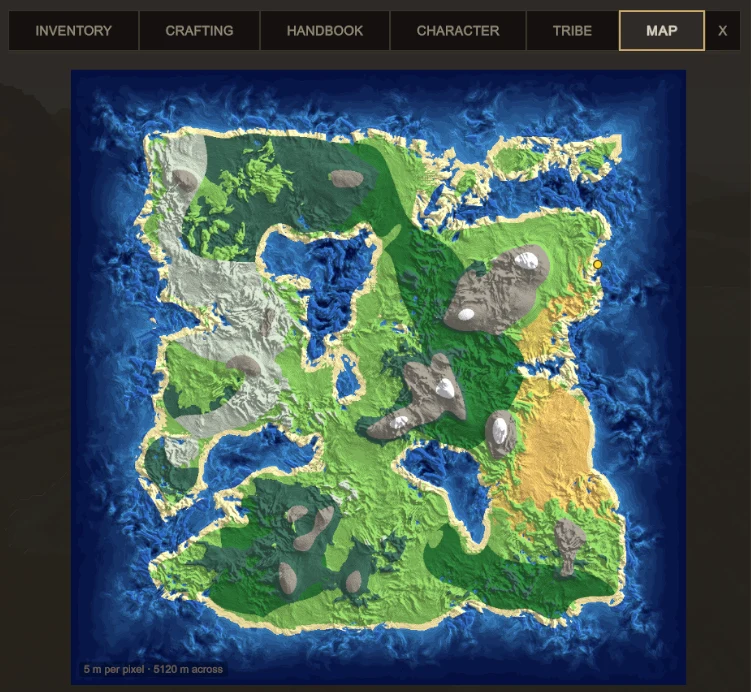
The in-game map. Pannable, zoomable, with your position marked and every river on it.
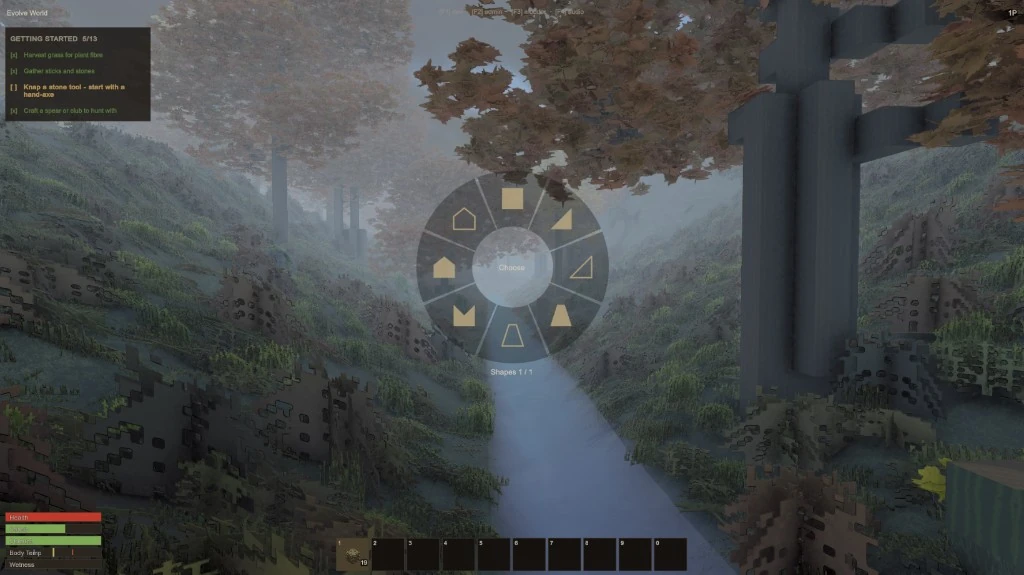
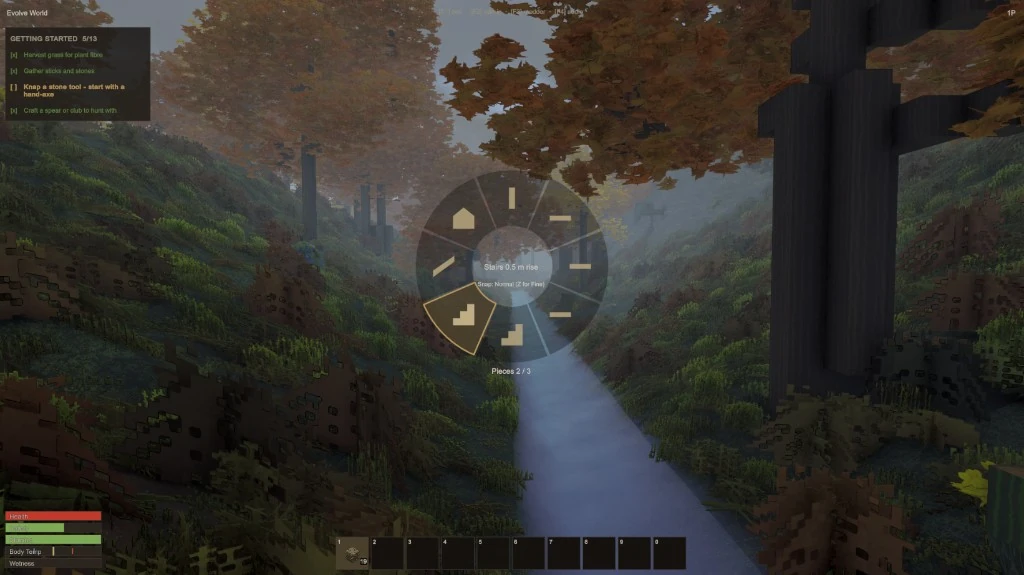
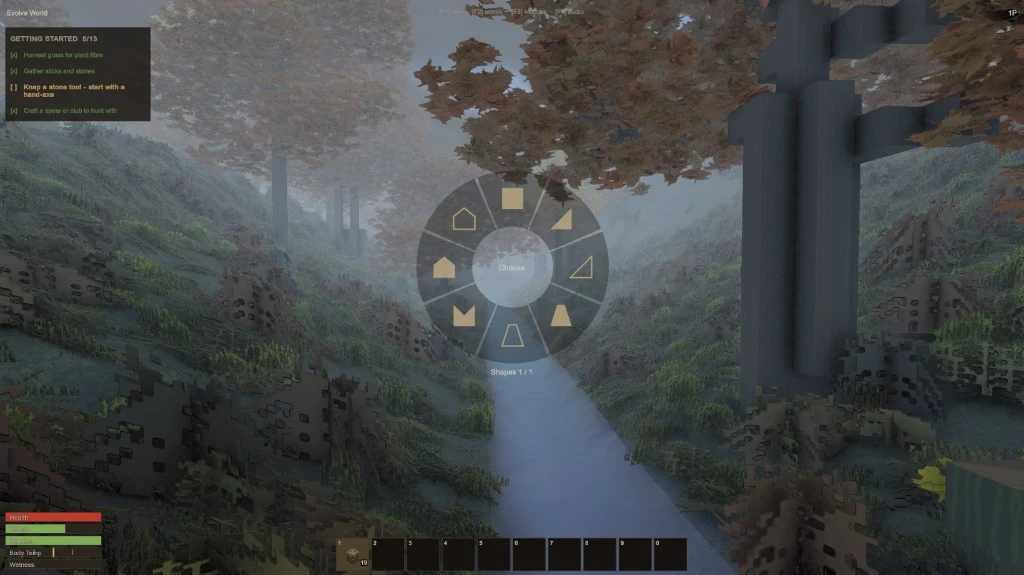
A house can be any shape you can hold in your head. Walls and floors go down as whole sections from the radial menu, thick or thin as you want them, and you can dig the back of it straight into the hill. Posts, beams and stairs sit off the block grid, move freely, and snap onto the joint you were aiming for, so a roof comes together fast. It all needs holding up, too. Build out over a drop with nothing underneath and it comes down.
Wall sections, floors and shapes placed as one piece instead of voxel by voxel.
Posts, beams and stairs with finer placement than the block grid allows.
Nearby connection points pull a piece into place. Works just as well on a controller.
Structures need a path to the ground. Knock out the wrong post and the rest comes down.
Rain soaks you, wind pulls the heat out of you, and a solid roof is what stops it. Clothing has real insulation and rain protection values you can see on the item, and your character screen adds them up so you know how well covered you are before you head out into a storm.
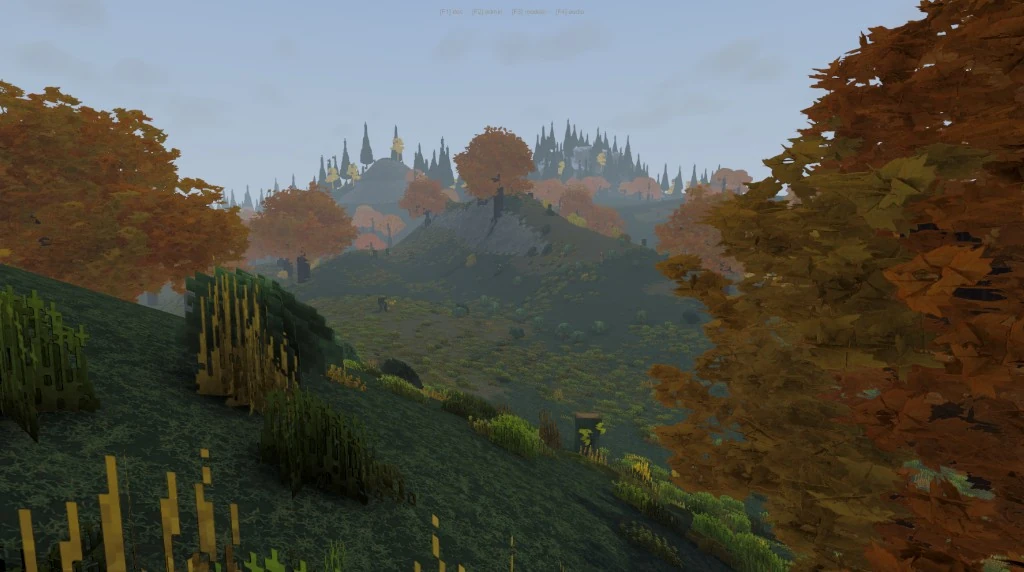
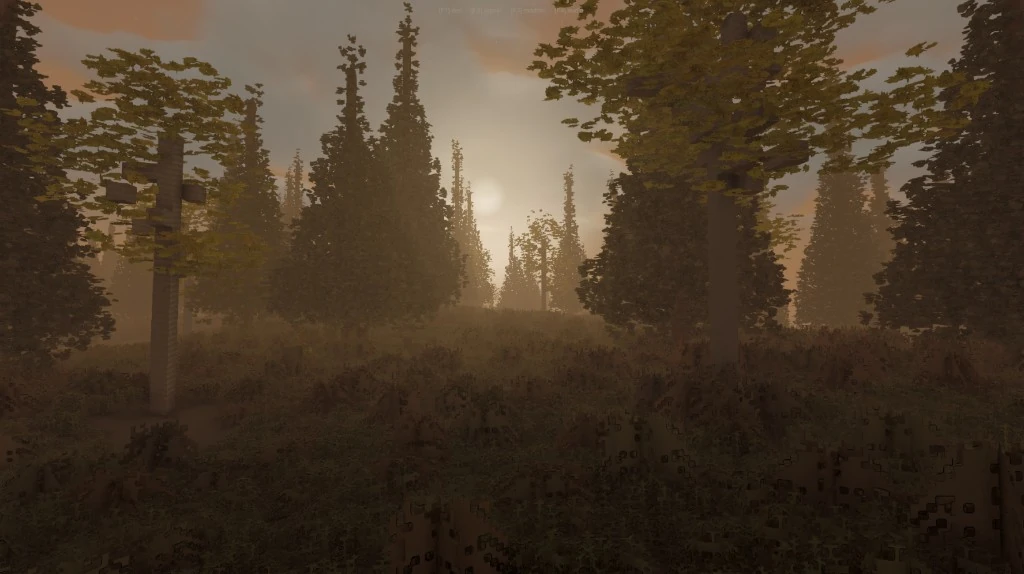
The snow goes, the canopy comes back and you can get seeds in the ground again.
The productive season. Plant, water, and put food by while the land lets you.
Trees turn at different times and the last harvests come in. This is your warning.
Rain turns to snow, cover builds on the ground and the trees, most crops stop, and frost kills anything still standing in the field.
You start by picking berries off wild bushes. Keep the bush for a renewable supply, or rip it out for a chance at seeds. Work the ground with a stone hoe, sow, and keep it watered: rain does it if the sky's open, a river or pond will do it if you plant close enough, and a fired clay watering can does it anywhere else.
12 crops so far, each with its own growing season. Winter frost kills everything left in the field except holly, which survives and is poisonous, so don't eat it.
Farmland under open sky drinks from passing weather.
A river or pond will keep a close plot damp on its own.
Fire clay into a can and carry water where the land is dry.
Keep a wild bush for renewable berries, or destroy it for a chance at species-specific seeds.
Work dirt or grass into farmland with a stone hoe, then sow a seed into the prepared ground.
Rain, nearby water and a watering can all feed the same soil moisture.
Crops grow through visible stages. Berry and leafy plants keep producing; roots, grain and gourds come up in one pull. Leave them into winter and the frost has them.
Growth only happens in the seasons marked below. Out of season a crop just sits there. Once the frost comes, everything except holly dies where it stands.
| Crop | Spring | Summer | Autumn | Winter | Frost |
|---|---|---|---|---|---|
 Blueberry Crop Blueberry Crop | Grows | Grows | Idle | Idle | Dies at -2°C |
 Carrot Crop Carrot Crop | Grows | Grows | Idle | Idle | Dies at -2°C |
 Emmer Wheat Emmer Wheat | Grows | Grows | Idle | Idle | Dies at -2°C |
 Onion Crop Onion Crop | Grows | Grows | Idle | Idle | Dies at -2°C |
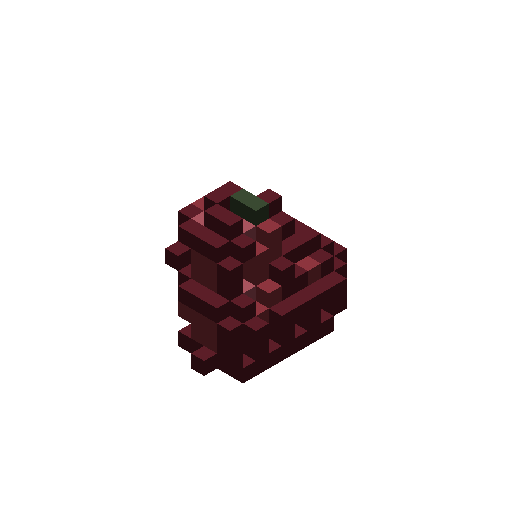 Raspberry Crop Raspberry Crop | Grows | Grows | Idle | Idle | Dies at -2°C |
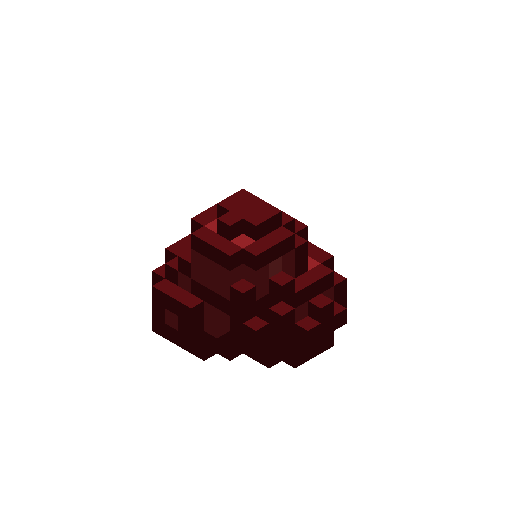 Cranberry Crop Cranberry Crop | Idle | Idle | Grows | Idle | Dies at -2°C |
 Elderberry Crop Elderberry Crop | Idle | Idle | Grows | Idle | Dies at -2°C |
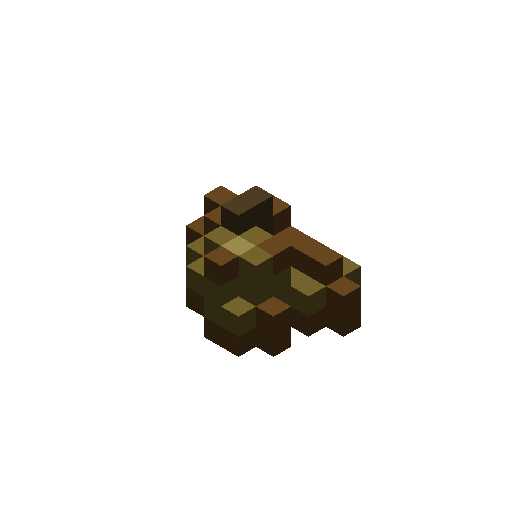 Cabbage Crop Cabbage Crop | Grows | Idle | Grows | Idle | Dies at -5°C |
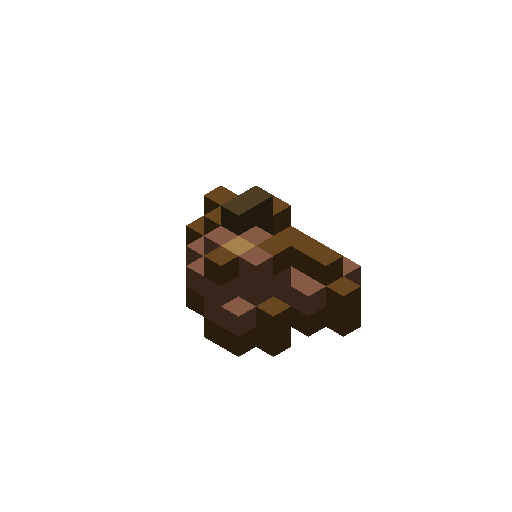 Turnip Crop Turnip Crop | Grows | Idle | Grows | Idle | Dies at -5°C |
 Blackberry Crop Blackberry Crop | Idle | Grows | Grows | Idle | Dies at -2°C |
 Pumpkin Crop Pumpkin Crop | Idle | Grows | Grows | Idle | Dies at -2°C |
 Holly CropPoisonous Holly CropPoisonous | Grows | Grows | Grows | Grows | Survives winter |
The first few days are about getting off the beach: fed, warm and under a roof. After that the island opens up. Somewhere out in the harder country is the way into the next age, and getting there is what everything you build at home is for.
Wake on the coast. Pick up a stick and a stone.
Strike stone into blades, axe heads and spear points.
Warmth, light, cooked food, and the first step to firing clay.
Forage the wild and learn which herds to follow and which to stay well away from.
Get a roof up before the first cold night.
Till, sow, harvest and store. Build the Stone Age workshops: pit kiln, quern, drying rack, stone furnace.
Craft a trough, mash up some feed and let a Gallimimus come to you. Saddle it and ride.
The far biomes are harder, and the way forward is hidden in one of them. I'm building this part now, and the journal is where I talk about it.
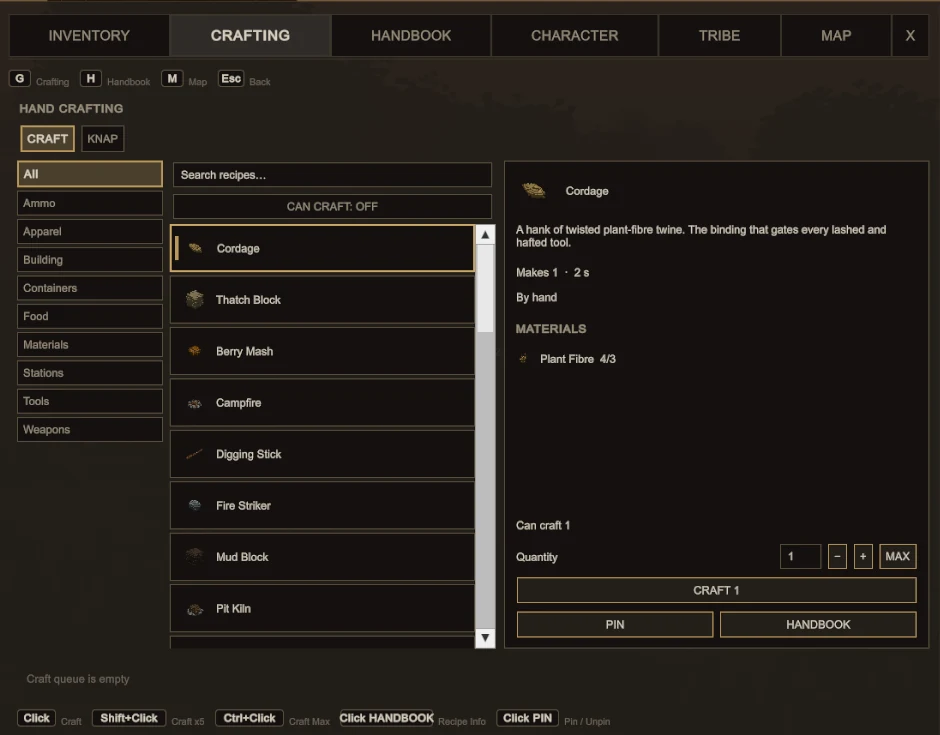
Hand crafting on day one is a short list. Cordage, a digging stick, a fire striker, mud and thatch. Every station you build after that unlocks its own list.
There's no XP bar and no skill tree. Three physical traits build from what you do and what you eat, and they fade if you stop. Between them they decide how hard you can push and how much punishment you can take.
Comes from sustained hard work. Sets how far you can push before you're spent.
Comes from eating well and staying healthy. Sets how much your body can absorb.
Follows what you've been eating over time. Only neglect changes it.
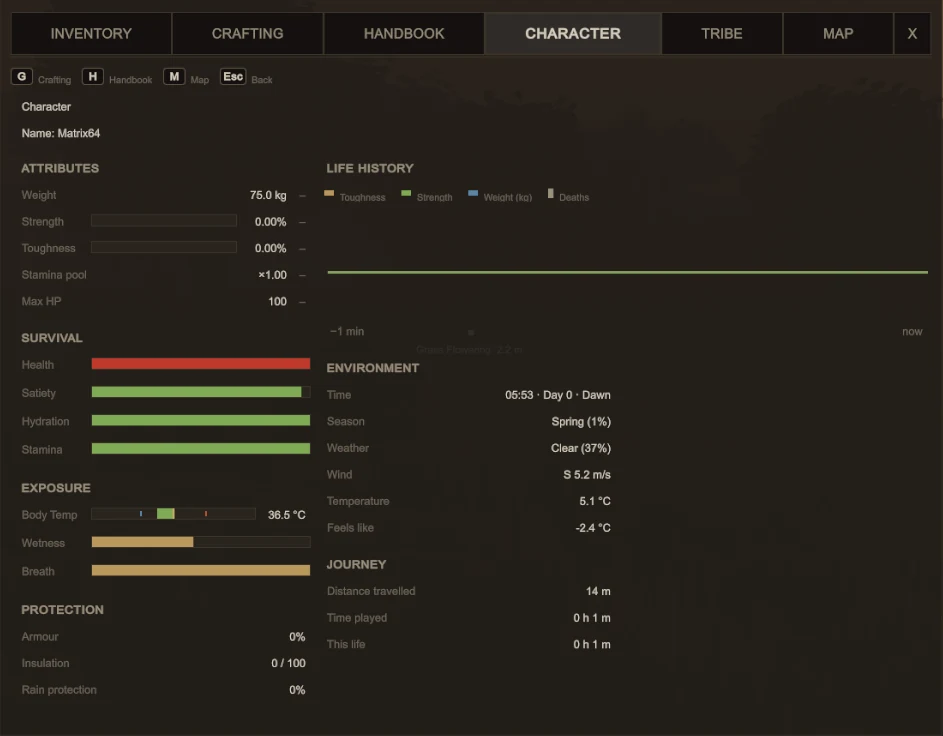
The character tab. Attributes on the left, the life history graph across the top, and what the weather is doing to you underneath it. Fresh spawn here, so everything is at zero and it's minus two with the wind.
When you die, a share of the strength and toughness you built above a fresh spawn is knocked back. Never all of it, and never your weight. Your gear stays where you fell. A character you've kept alive for a long time has something real to lose.
Evolve works on your own, but it's built to be played with other people, and against them. A tribe's totem claims the land around it, and while it stands only your tribe can build, break or dig inside that boundary.
Claimed land is where your shelter, stores and fields are safe from other players' hands.
A good claim makes your totem a target. Other players will test the edges, and the dinosaurs outside don't care whose land it is.
I write up the bigger changes as I go: what I was trying to build, what went wrong, and what it changed in the world.
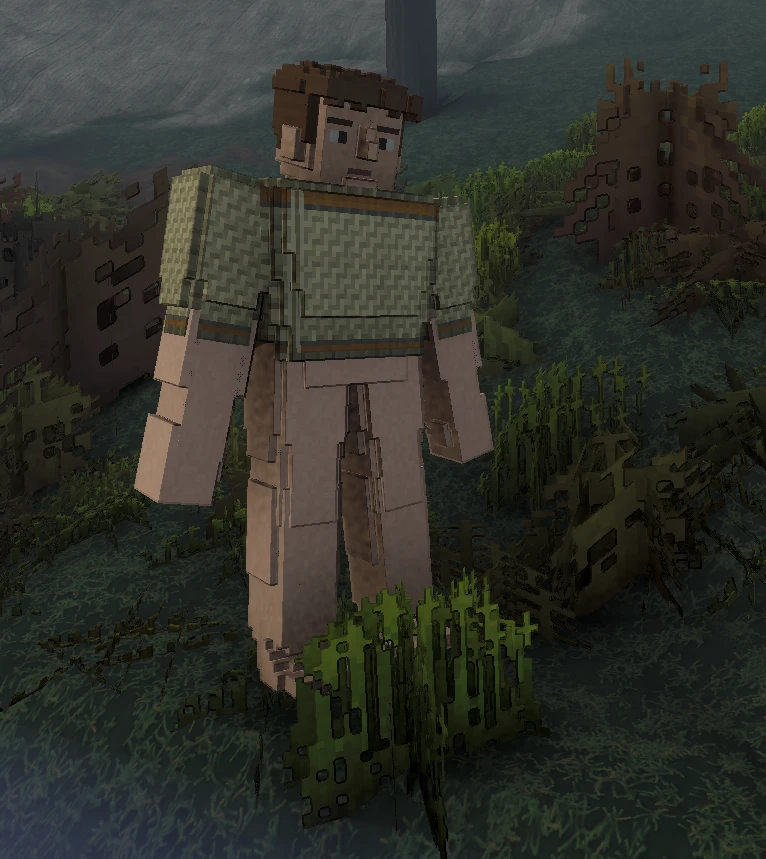
Once I moved the dinosaurs over to micro voxels, the old character suddenly started to look a bit ridiculous next to them. The original player was only made up...
Read the postTruth be told, I wasn’t planning to touch this at this stage either, but the more I played with what I had, the more basic it started to feel. I’d also been...
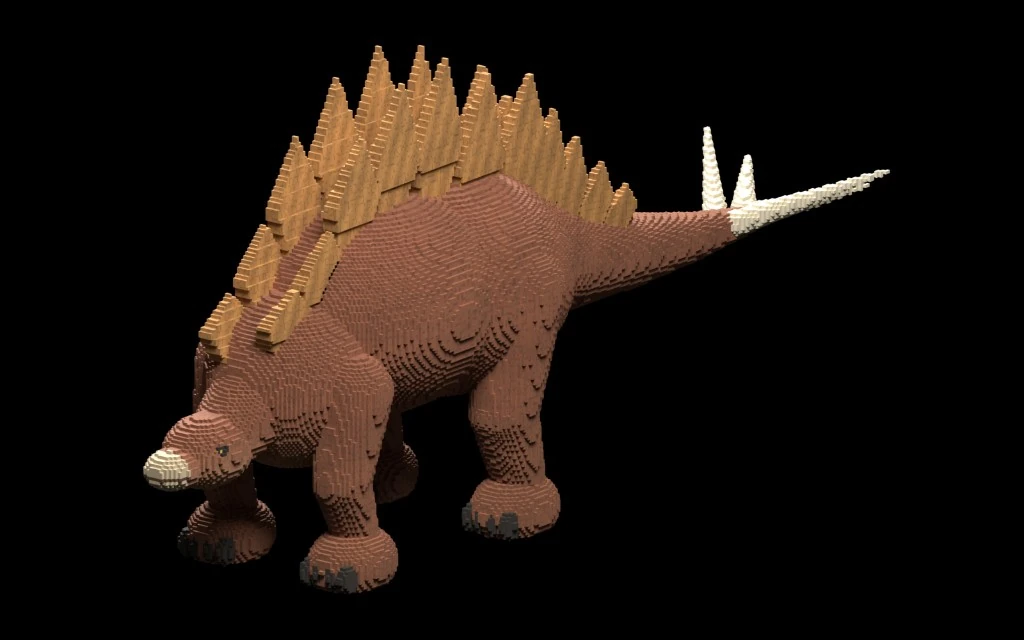
Read the postI actually wasn’t planning to start working on this just yet, but the prototype dinosaurs I had in the game were starting to stand out for the wrong reasons...
Read the postWishlist Evolve - First Age and Steam will tell you when Early Access opens. In the meantime the journal is where I write up what I'm working on.